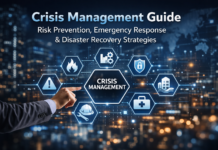
In today’s fast-moving environment, organizations face risks that are more complex and interconnected than ever before. From operational disruptions and cyber incidents to regulatory challenges and supply chain interruptions, preparedness has become a core leadership responsibility.
Modern business continuity strategies go beyond basic contingency planning. They integrate technology, structured workflows, and clear accountability to ensure stability even in unpredictable situations. Organizations that invest in structured preparedness build confidence, resilience, and long-term sustainability.
Anticipating Disruptions Before They Escalate
Many business disruptions begin as minor operational irregularities. Without proper monitoring and structured oversight, these small issues can quickly grow into significant crises.
A forward-looking risk management framework helps identify early warning signals through structured reporting systems, internal audits, and continuous performance tracking. By acting early, organizations reduce financial impact and protect operational integrity.
Establishing Clear Roles and Responsibilities
During high-pressure events, confusion often stems from unclear accountability. A structured response model defines who is responsible for decision-making, communication, and execution at every stage of a disruption.
By assigning roles in advance and documenting escalation pathways, organizations eliminate uncertainty and enable faster, more coordinated responses.
Improving Communication Across Departments
Effective crisis preparedness depends on transparent and timely communication. When teams operate in silos, response efforts become fragmented and inefficient.
Centralized coordination systems and shared dashboards ensure that leadership, operations, compliance teams, and external stakeholders remain aligned. This collaborative structure enhances situational awareness and minimizes misunderstandings during critical moments.
Building a Culture of Preparedness
Technology alone cannot ensure resilience. A culture of preparedness must be embedded across the organization.
Regular training programs, simulation exercises, and performance reviews reinforce readiness. Employees who understand risk protocols respond more confidently and contribute to faster recovery.
Enhancing Documentation and Audit Readiness
Accurate documentation plays a critical role in regulatory compliance and legal protection. Structured record-keeping systems allow organizations to track decisions, response timelines, and corrective actions.
This transparency not only supports audits but also builds trust with clients, partners, and regulatory authorities.
Turning Preparedness into Competitive Advantage
Organizations that prioritize business continuity gain more than operational stability — they earn stakeholder confidence. Clients and partners prefer working with businesses that demonstrate reliability and structured governance.
Preparedness strengthens brand reputation, reduces financial uncertainty, and positions organizations for sustained growth.
Looking Ahead
The strongest organizations are not those that avoid risk entirely, but those that manage it strategically. By combining structured planning, technology-enabled monitoring, and leadership commitment, businesses can navigate uncertainty with confidence.
Resilience is no longer a reactive measure — it is a proactive strategy for long-term success.