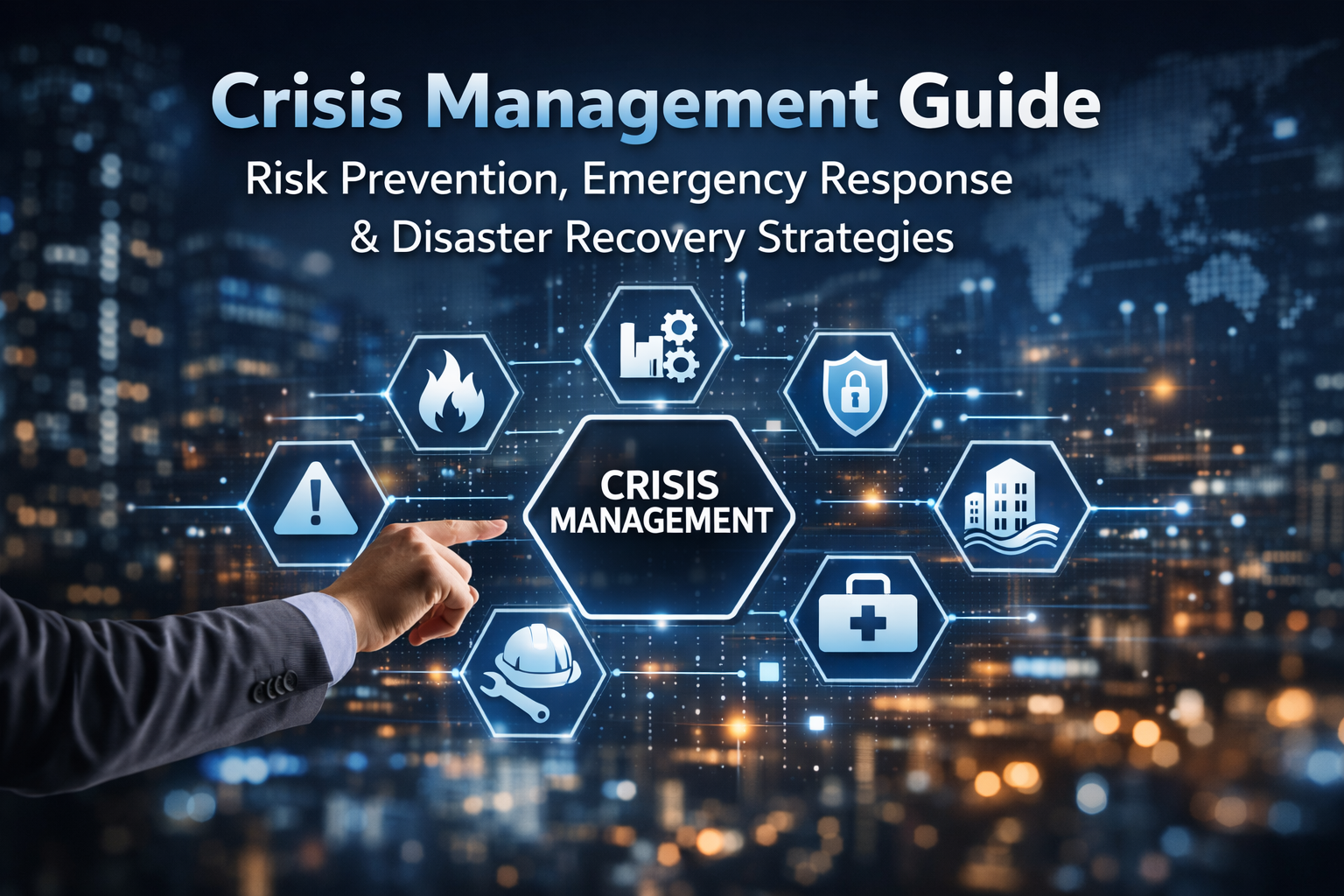
In today’s fast-moving world, crisis management is not a matter of if — it is a matter of when. From industrial accidents and fire hazards to natural disasters and operational failures, organizations and individuals must be prepared with a strong emergency response and risk management strategy.
Modern crisis management is no longer just reactive — it is a strategic approach to risk prevention, safety planning, and business continuity, ensuring protection of lives, assets, and reputation.
From Reaction to Preparedness in Crisis Management
Traditionally, crisis management focused on responding after an incident occurred. Today, the focus has shifted toward proactive crisis prevention and emergency preparedness.
An effective crisis management plan includes:
- Identifying potential risks before they escalate
- Establishing clear emergency response protocols
- Training teams for crisis and disaster situations
- Ensuring fast and informed decision-making under pressure
- Maintaining strong communication during disruptions
Crisis management is not about eliminating risks completely — it is about being prepared to respond with control, speed, and confidence.
What is a Crisis? Understanding Risk & Emergency Situations
A crisis situation is any event that:
- Disrupts normal operations
- Threatens human safety or property
- Requires immediate emergency response
- Has the potential for long-term damage
Common Types of Crises:
- Fire incidents in buildings, offices, or factories
- Electrical failures, short circuits, or power overloads
- Industrial and workplace accidents
- Natural disasters (earthquakes, floods, storms)
- Cybersecurity threats and system failures
Why Crisis Management is Critical in Modern Infrastructure
With rising urbanization, electrical consumption, and infrastructure complexity, the risk of emergencies is increasing rapidly.
Without a proper crisis management system:
- Small technical issues can escalate into major disasters
- Financial and operational losses increase significantly
- Human lives are put at serious risk
- Business continuity is disrupted
- Brand trust and reputation suffer long-term damage
Organizations with strong crisis management strategies can minimize risks, recover faster, and maintain operational stability.
Key Pillars of Effective Crisis Management & Risk Control
1. Risk Assessment & Prevention
- Identify vulnerabilities in electrical and infrastructure systems
- Conduct regular safety audits and inspections
- Implement preventive technologies like fire safety systems and surge protection
2. Emergency Response Planning
- Develop structured emergency response plans
- Define clear roles and responsibilities
- Ensure availability of fire safety and emergency equipment
3. Training & Safety Awareness
- Conduct regular emergency drills and simulations
- Train employees, staff, and residents
- Increase awareness of early warning signs and hazards
4. Crisis Communication Strategy
- Establish clear communication channels
- Provide accurate and timely updates
- Avoid panic through controlled information flow
5. Recovery & Business Continuity Planning
- Restore operations quickly after a crisis
- Analyze incidents to prevent recurrence
- Strengthen systems for long-term resilience
Role of Technology in Crisis Management & Safety Systems
Modern crisis management solutions are powered by advanced technology and smart infrastructure:
- Real-time monitoring and alert systems
- IoT-based safety and automation devices
- Automated fire detection and suppression systems
- Energy-efficient and safe electrical infrastructure
- Predictive analytics for risk identification and prevention
Technology enables faster response time, improved accuracy, and enhanced safety outcomes.
Real-World Insight: How Small Electrical Issues Lead to Major Crises
Many large-scale disasters begin with small and preventable issues:
- Overloaded electrical circuits
- Poor-quality wiring and equipment
- Lack of maintenance and inspection
- Absence of fire safety systems
These minor oversights can lead to serious fire hazards, electrical failures, and operational breakdowns.
Key Insight: Prevention and early risk detection can reduce up to 70–80% of crisis-related damage.
Best Practices for Crisis Prevention & Safety Management
To build an effective crisis management strategy, follow these best practices:
- Use certified and energy-efficient electrical products
- Install fire safety and surge protection systems
- Conduct periodic risk assessments and safety audits
- Monitor electricity usage and load distribution
- Implement smart and automated safety solutions
- Ensure compliance with safety regulations and standards
Building a Crisis-Ready Safety Culture
Crisis management is not just a process — it is a culture of safety, awareness, and responsibility.
Organizations and individuals must:
- Prioritize safety in daily operations
- Invest in reliable and certified infrastructure
- Follow regulatory compliance and safety standards
- Promote accountability at every level
A strong safety culture leads to reduced risks, improved efficiency, and long-term sustainability.
Conclusion: Crisis Management is the Key to Safety & Stability
Effective crisis management and disaster preparedness ensure that you stay in control even during uncertainty. It is the difference between panic and precision, loss and recovery.
By adopting proactive planning, leveraging technology, and improving awareness, we can create safer homes, industries, and communities.
The goal is simple:
Be Prepared. Stay Protected. Act with Confidence.