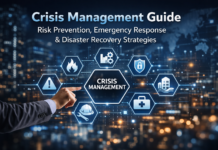
In today’s fast-moving business environment, uncertainty is no longer occasional — it is constant. Economic shifts, regulatory changes, cyber risks, operational disruptions, reputational challenges, and global instability can arise without warning.
Crisis management is not simply about responding after damage occurs. It is about preparation, structured response, and disciplined leadership. Organizations that build strong crisis frameworks protect their operations, reputation, and long-term sustainability.
Effective crisis leadership combines readiness, clarity, and confident decision-making.
Identifying Risks Before They Escalate
Most major disruptions begin as small warning signs. These may appear as declining performance indicators, compliance gaps, customer dissatisfaction, supply delays, or financial strain.
Organizations that regularly conduct risk assessments, performance reviews, and compliance audits can detect these early signals. Acting at the early stage reduces impact and prevents escalation.
Prevention is always more effective than reaction.
Establishing Clear Leadership During a Crisis
When disruption strikes, uncertainty can create confusion. Without defined authority and structured communication, response efforts slow down.
A well-designed crisis framework clearly defines:
• Decision-making authority
• Escalation protocols
• Departmental responsibilities
• Internal coordination processes
When roles are clearly assigned, the organization can act quickly, confidently, and consistently.
Clarity reduces chaos.
Transparent Communication with Stakeholders
During a crisis, silence creates fear. Employees, customers, partners, and investors seek direction and reassurance.
Clear, honest, and timely communication strengthens trust. Sharing verified updates, outlining corrective steps, and demonstrating visible leadership involvement reassures stakeholders that the situation is under control.
Trust built during difficult times strengthens long-term credibility.
Protecting Business Continuity
Operational disruptions can affect supply chains, technology infrastructure, staffing, and service delivery.
Business continuity planning ensures stability through:
• Backup vendors and suppliers
• Alternative operational workflows
• Remote work capabilities
• Cross-trained personnel
• Documented recovery procedures
Prepared organizations maintain momentum even under pressure.
Continuity planning safeguards stability.
Managing Financial Stability
Crises often result in financial strain — reduced revenue, unexpected expenses, legal costs, or market volatility.
Strong financial risk planning includes:
• Emergency reserves
• Insurance coverage
• Budget flexibility
• Scenario-based forecasting
Financial preparedness allows organizations to absorb shocks without compromising long-term strategy.
Resilience begins with financial discipline.
Strengthening Internal Coordination
A crisis demands unified action. Poor communication between departments can slow response and increase risk.
Organizations benefit from:
• Centralized reporting systems
• Real-time monitoring tools
• Cross-functional crisis teams
• Regular leadership briefings
Aligned teams respond faster and more effectively.
Collaboration drives control.
Learning and Improving After Every Crisis
Once stability is restored, reflection is essential.
Organizations should:
• Conduct post-crisis reviews
• Identify strengths and weaknesses
• Update risk protocols
• Enhance training programs
Continuous improvement transforms experience into strategic advantage.
Every challenge is an opportunity to strengthen systems.
Building Confidence Through Preparedness
Organizations that manage crises with transparency, discipline, and responsibility build stronger stakeholder confidence.
Preparedness enhances reputation, demonstrates accountability, and reinforces leadership credibility.
Crisis readiness is not a defensive strategy — it is a competitive advantage.
Leading with Confidence in an Uncertain Future
Uncertainty will always exist. The objective is not to eliminate risk completely, but to manage it intelligently.
By establishing structured crisis plans, strengthening financial controls, ensuring operational continuity, and maintaining transparent communication, organizations can navigate volatility with confidence.
Crisis management is not about panic —
it is about preparation, leadership, and protecting long-term success.