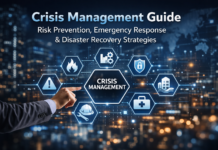
In an environment shaped by rapid technological shifts, economic fluctuations, and global uncertainty, organizations must be prepared to act decisively when disruption strikes. Financial instability, sudden policy changes, operational breakdowns, public relations challenges, and infrastructure failures can emerge without warning.
Crisis management today is not simply about damage limitation — it is about structured leadership, coordinated execution, and sustained stability. Organizations that build strong crisis governance frameworks protect not only their operations but also their credibility and long-term growth.
Modern crisis leadership demands preparedness that is integrated into strategy, supported by technology, and reinforced through accountability.
Identifying Risk Exposure Before It Escalates
Most crises are preceded by warning indicators — performance inconsistencies, compliance deviations, operational delays, or stakeholder dissatisfaction. When these early signals are ignored, small problems can rapidly escalate into major disruptions.
Forward-looking organizations deploy risk assessment tools, internal control systems, and performance audits to identify vulnerabilities. Continuous monitoring and early corrective action significantly reduce the likelihood of severe operational or reputational damage.
Establishing a Command Structure During Critical Events
During high-impact incidents, clarity of authority becomes essential. Without a defined command structure, organizations may face delayed decisions and inconsistent communication.
A structured crisis governance model outlines leadership hierarchy, escalation triggers, and decision-making authority. It ensures that operational, legal, financial, and communication teams act in coordination rather than isolation. Defined leadership channels enable faster stabilization and improved response efficiency.
Maintaining Stakeholder Confidence in Challenging Times
Stakeholders expect transparency and reliability during uncertainty. Investors, customers, partners, and employees closely observe how organizations respond under pressure.
Consistent updates, factual communication, and visible leadership engagement build confidence. Organizations that maintain open dialogue during difficult situations preserve trust and demonstrate accountability.
Operational Resilience Through Contingency Planning
Disruptions can affect supply networks, workforce availability, infrastructure, and service delivery. Effective crisis preparedness includes detailed contingency strategies to maintain business continuity.
Diversified sourcing strategies, alternate operational plans, and cross-trained teams help sustain operations even when primary systems are affected. Structured preparedness ensures that business functions continue with minimal interruption.
Financial Risk Management During Crisis
Unexpected events often carry financial implications — revenue loss, legal costs, operational expenses, and reputational impact.
Prudent financial planning includes emergency reserves, insurance coverage, and stress-tested budgeting models. Organizations that proactively assess financial risk exposure are better equipped to absorb shocks without long-term instability.
Strengthening Internal Coordination and Collaboration
Crisis response requires seamless collaboration across departments. Fragmented communication slows response time and increases confusion.
Integrated reporting systems, centralized dashboards, and collaborative platforms allow leadership to track developments in real time. Unified coordination enhances efficiency and reduces duplication of effort.
Learning Through Post-Crisis Evaluation
Every crisis presents an opportunity to strengthen systems. Structured review processes help organizations evaluate response effectiveness and identify improvement areas.
Post-event analysis, risk reassessment, and policy updates ensure that lessons learned translate into stronger future preparedness. Continuous refinement turns experience into strategic advantage.
Building Organizational Confidence Through Preparedness
Companies that demonstrate strong crisis leadership often reinforce their market position. Structured governance and responsible decision-making enhance brand reliability and stakeholder trust.
Preparedness not only protects operational stability but also strengthens competitive standing. Organizations known for decisive and disciplined crisis management inspire confidence in partners and clients alike.
Looking Toward Sustainable Stability
The business landscape will remain dynamic and unpredictable. Volatility is no longer an exception — it is part of the operating environment.
By embedding structured crisis governance, proactive risk assessment, financial resilience, and leadership alignment into core strategy, organizations can navigate uncertainty with stability and foresight.
Crisis management is no longer about reacting to emergencies — it is about building systems that sustain performance, protect reputation, and ensure long-term resilience in an ever-changing world.