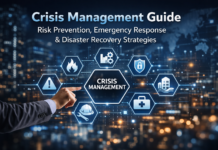
In today’s hyperconnected world, crises unfold faster than ever. A single social media post can trigger reputational damage within minutes. A ransomware attack can paralyze operations overnight. Geopolitical instability, climate-related disruptions, supply chain volatility, and regulatory shifts continue to challenge organizations across industries.
Crisis management has evolved from reactive damage control to real-time strategic leadership. Organizations must now operate with agility, transparency, and technological readiness to protect operational continuity and stakeholder confidence.
Modern crisis management is not a static document stored in a file — it is a dynamic system embedded within leadership culture, digital infrastructure, and organizational processes.
Responding to Cyber and Digital Threats
Cybersecurity incidents have become one of the most immediate and financially damaging crises businesses face. Data breaches, ransomware attacks, and system outages can disrupt services and erode trust within hours.
Forward-thinking organizations implement continuous threat monitoring, multi-layer security frameworks, and rapid incident response teams. Preparedness includes clear communication protocols for customers, regulators, and partners in the event of a breach. Swift containment and transparent reporting minimize long-term impact and protect brand credibility.
Managing Reputation in the Era of Social Media
Reputational risks now spread at digital speed. Online backlash, misinformation, or viral customer complaints can escalate before leadership fully understands the situation.
A proactive reputation management strategy includes social listening tools, designated spokespersons, and predefined response templates. Real-time monitoring allows organizations to address concerns promptly and prevent narratives from spiraling out of control. Authentic communication and accountability are critical to maintaining public trust.
Ensuring Operational Continuity Amid Global Disruptions
Recent global events have highlighted vulnerabilities in supply chains and workforce availability. Logistics delays, energy shortages, and geopolitical tensions require organizations to plan beyond traditional risk scenarios.
Resilient businesses diversify suppliers, maintain contingency inventory buffers, and establish alternative operational routes. Scenario planning and stress-testing exercises help organizations anticipate disruptions and maintain service delivery even in uncertain environments.
Ensuring Operational Continuity Amid Global Disruptions
Recent global events have highlighted vulnerabilities in supply chains and workforce availability. Logistics delays, energy shortages, and geopolitical tensions require organizations to plan beyond traditional risk scenarios.
Resilient businesses diversify suppliers, maintain contingency inventory buffers, and establish alternative operational routes. Scenario planning and stress-testing exercises help organizations anticipate disruptions and maintain service delivery even in uncertain environments.
Supporting Workforce Stability During Crisis
Employees are at the center of any crisis response. Economic uncertainty, health emergencies, and remote work challenges require organizations to prioritize workforce well-being alongside operational stability.
Clear internal communication, flexible policies, and leadership visibility reduce anxiety and strengthen morale. When employees feel informed and supported, they contribute more effectively to crisis resolution and recovery efforts.
Adapting to Regulatory and Compliance Shifts
Regulatory landscapes continue to evolve, particularly in data protection, financial transparency, and environmental responsibility. Non-compliance during a crisis can amplify risk and trigger legal consequences.
Organizations that maintain strong governance structures and compliance tracking systems respond more confidently to regulatory changes. Proactive documentation and audit readiness ensure that crisis response actions align with legal requirements.
Leveraging Real-Time Data for Informed Decisions
Crisis response today depends on immediate access to accurate information. Leadership teams must rely on centralized dashboards, analytics platforms, and cross-functional collaboration tools to assess evolving situations.
Real-time data enables rapid decision-making, efficient resource allocation, and transparent reporting. Digital integration transforms crisis management from guesswork into structured control.
Embedding Agility into Organizational Culture
Preparedness is not achieved through policies alone. It requires a culture that encourages awareness, accountability, and continuous improvement.
Regular simulations, crisis drills, and cross-departmental training sessions prepare teams for unexpected scenarios. Organizations that normalize preparedness respond with confidence rather than panic.
From Reaction to Strategic Advantage
Companies that manage crises effectively often emerge stronger. Demonstrating accountability, transparency, and operational control builds trust with clients, investors, and regulators.
Effective crisis management strengthens brand reputation, protects financial performance, and enhances long-term competitiveness. It transforms disruption into an opportunity to demonstrate resilience and leadership.
Preparing for an Uncertain Tomorrow
The business landscape will continue to evolve. Digital transformation, global interdependence, and rapid communication will keep reshaping risk environments.
Organizations that invest in adaptive frameworks, technological integration, and strong leadership alignment will navigate future challenges with confidence.
Crisis management is no longer about containing damage — it is about building organizational agility that turns uncertainty into strategic strength.